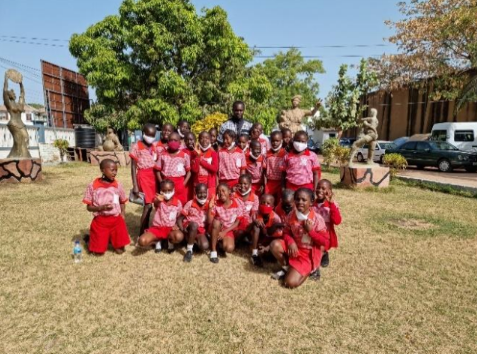
Apart from during Covid the children are taken once a year on a field trip to gain experience outside of the classroom. They are taken one class at a time, so they are only in groups of 20 to 26 pupils. A list of places to visit has been drawn up and each year the children will visit one of those places.
Some of the children have not even been outside of walking distance of the school in Manji. Just 2 miles from the school is the main shopping street, it was the first time that some of these children had ever seen the bigger shops. The excitement from them was overwhelming and a pleasure to see. It makes the realisation of how important trips of this kind are to broaden their spectrum. The photo on the right is Grade 3 Visiting Banjul Museum.
The pictures on the left is Grade 1 and 2 visiting the Horse and Donkey Trust, which is another worthy charity that takes care of the welfare of animals in the rural areas. Interacting with the animals teaches them respect and caring for creatures.
Grade 5 visited a place called “MY FARM” They run an education centre for students to learn sustainable farming, they include keeping beehives for honey, they teach the students how to dry and cook with solar powered systems, and they make lots of preserves such as mango jam and chutneys.
The photo below on the left is grade 5 visiting the tech lab, and below on the right, the children visited a Trade fair where many local products were on display and for sale.
FOOD SCIENCE CLASSES
Julie has introduced food science classes for Grade 6, the subject covers, Hygiene, Nutrition, Food preservation as well as basic cooking skills. The subject offers a good foundation for science and biology, which they will take up once they are in High school. Food preservation is a subject that has been forgotten in the western world since processed foods have become so easily available.
Preserving food is a skill that is essential in these parts of Africa, where there is very poor electricity supply and a huge lack of regular food supplies, as many places do not have shops. Fruits are eaten seasonally and so much goes to waste. When there is an abundance of oranges or mangos you can find them rotting in the streets and yet they are so easily turned into jams, marmalade, and chutney.
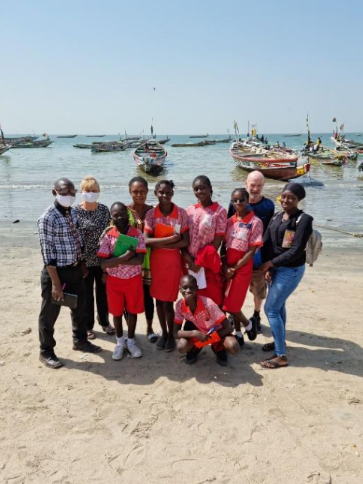
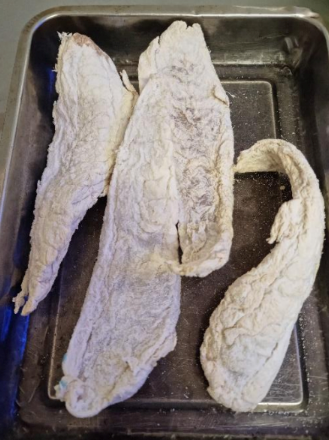
Above: Class of 2021/22 Grade 6 on Tanji Beach visiting the fish market and smoke house. On the right is some salt dried butterfish made by the children
The process of smoking fish is done in the smoking sheds in Tanji fish market but so many people don’t understand how easy it is to do at home. A lot of people still cook on charcoal fires so dry smoking is very easy to do, not only fish but meat too, meat can be kept for months which would be very important knowledge for people living in the villages in rural areas, but the local people do not understand this very simple process.
Drying fish with salt is mainly used in Mediterranean countries like Italy and Spain, yet it is an easy process that just takes 5 days under the sun and the fish can be kept for up to year without spoiling. Providing the children with this knowledge will hopefully allow them to pay forward in the future.
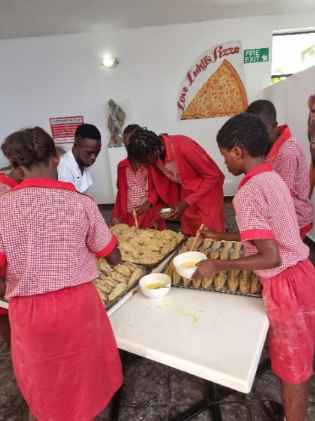
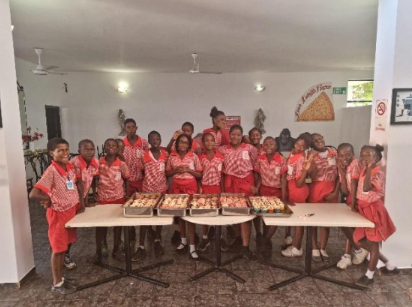
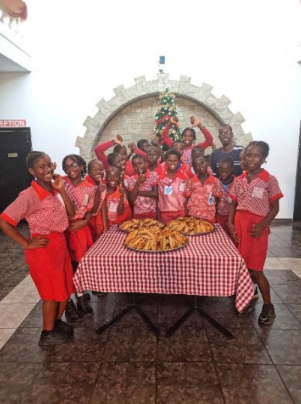
Below: Grade 6 Class of 2022/23, on the left making Cornish pasties, middle, making cupcakes for their Christmas party. On the right the finish product of Cornish pasties
Baking has taught them to work as a team and allowed them to show their creative skills.